

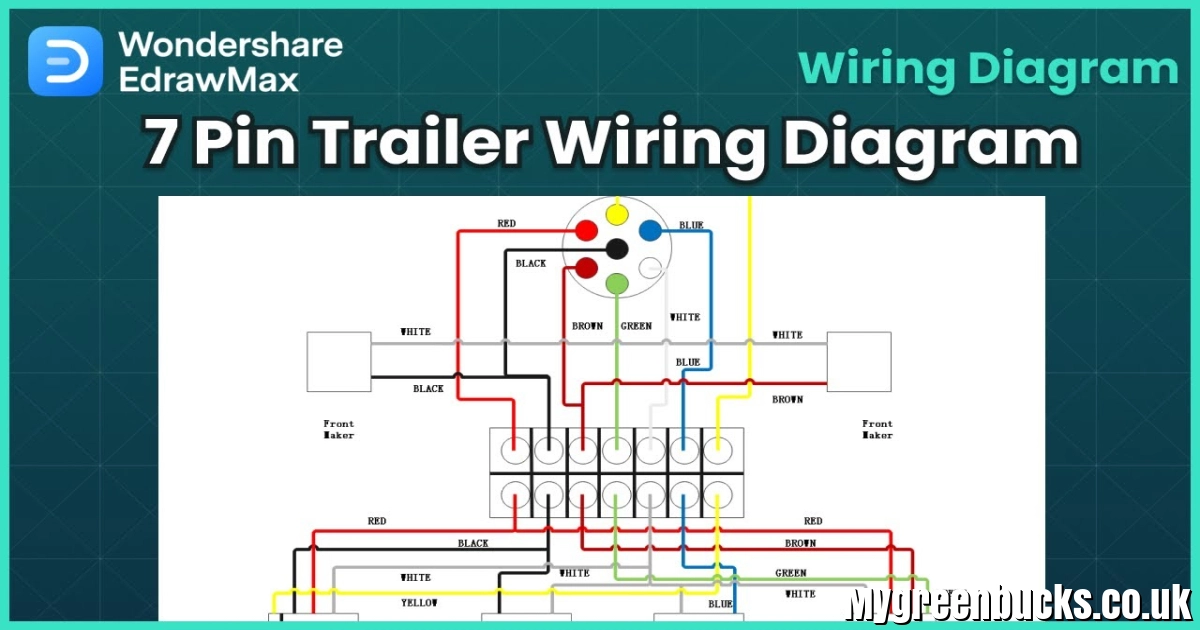
Wiring Diagram 7 Pin Plug Trailer in the United States, you’re in the right place. Whether you’re towing a travel trailer, RV, boat trailer, horse trailer, or utility trailer, the US standard 7-way RV blade connector is the system you’ll most likely encounter.
As of 2026, the official North American standard follows SAE J2863 (7-Way RV Blade Style) — used by major brands like Ford, Chevrolet, Ram, Toyota, CURT, Reese, Hopkins, and etrailer.
This guide breaks down:
-
Pin functions
-
Wire color codes (US standard)
-
Installation tips
-
Common problems
-
Testing procedures
-
Safety recommendations
Let’s wire it correctly the first time.
1. What Is the US Standard 7-Pin Trailer Plug? (7-Way RV Blade Connector)
The 7-pin trailer plug, also called the 7-way RV blade connector, is the most common trailer wiring system in the United States.
It supports:
-
Running lights
-
Brake lights
-
Turn signals
-
Electric trailer brakes
-
12V auxiliary power
-
Reverse lights
-
Ground connection
Unlike the smaller 4-pin connector (lights only), the 7-pin system allows for electric brake control and battery charging, making it essential for RVs and larger trailers.
Where It’s Used in the US
You’ll find this connector on:
-
Travel trailers
-
Fifth wheels
-
Toy haulers
-
Boat trailers
-
Horse trailers
-
Heavy utility trailers
Virtually every modern US truck with a factory tow package includes a 7-way blade socket.
How It Looks
The US standard uses:
-
Flat blade terminals
-
Circular housing
-
Keyed design to prevent incorrect insertion
This is different from:
-
Round-pin 7 connectors (older style)
-
4-pin flat connectors (basic trailers)
-
European 13-pin connectors
If you’re in the US, this is the standard you want.
2. US 7-Pin Trailer Plug Wiring Diagram (Pin Functions & Color Codes)
Below is the official US wiring layout when looking at the male plug with the ground pin at the bottom.
US Standard Pin Functions & Wire Colors
| Pin # | Function | Wire Color (Standard US) | Notes |
|---|---|---|---|
| 1 | Ground | White | Essential – connects to trailer frame |
| 2 | Tail / Running / Marker Lights | Brown | Activates with headlights |
| 3 | Left Turn & Brake | Yellow | Also hazard lights |
| 4 | Right Turn & Brake | Green | Also hazard lights |
| 5 | Electric Brakes | Blue | Connects to brake controller |
| 6 | 12V Auxiliary Power | Red or Black | Charges trailer battery |
| 7 | Reverse / Backup Lights | Black or Yellow | Activates in reverse |
Important US-Specific Notes
-
White (Ground) is the most critical connection.
-
Blue wire must connect to a brake controller inside the tow vehicle.
-
Red/Black auxiliary wire provides constant 12V power.
-
Always confirm orientation before wiring — plug perspective matters.
This diagram matches industry standards used by CURT, Reese, Hopkins, etrailer, and OEM truck manufacturers.
3. Step-by-Step Installation Guide (US Standard 2026)
Installing a 7-pin plug isn’t complicated — but mistakes can cause lighting failures or brake issues.
Step 1: Match Wire Colors Pin-for-Pin
On both vehicle and trailer sides:
-
Connect white to white
-
Brown to brown
-
Yellow to yellow
-
Green to green
-
Blue to blue
-
Red/Black to matching 12V
-
Reverse wire to reverse
If colors don’t match, follow function — not color.
Step 2: Secure Ground Properly
Ground is the #1 source of trailer wiring problems.
-
Attach white wire securely to trailer frame
-
Remove paint or rust before grounding
-
Use a star washer for better contact
Poor grounding causes:
-
Flickering lights
-
Dim signals
-
Brake failure
-
Intermittent power
Step 3: Use Proper Connectors
For permanent connections:
-
Use heat-shrink butt connectors
-
Or solder + heat shrink
-
Avoid cheap twist connectors
-
Seal connections from moisture
Step 4: Apply Dielectric Grease
Apply inside plug terminals to:
-
Prevent corrosion
-
Reduce moisture damage
-
Extend connector lifespan
4. Testing Your 7-Pin Trailer Plug (Before Towing)
Never tow without testing your wiring.
Method 1: 7-Way Plug Tester
A plug-in tester quickly confirms:
-
Turn signals
-
Brake lights
-
Running lights
-
Reverse lights
-
12V power
-
Ground continuity
These are inexpensive and widely available in the US.
Method 2: Multimeter Testing
Set multimeter to DC volts:
-
Ground probe on white wire
-
Test each pin while activating vehicle controls
Expected results:
-
Running lights → 12V on brown
-
Left turn → flashing 12V on yellow
-
Right turn → flashing 12V on green
-
Reverse → 12V on reverse wire
-
Auxiliary → constant 12V
Brake Controller Test
For electric brakes:
-
Connect trailer
-
Use manual brake lever
-
Listen for brake magnet hum
If silent, check blue wire and controller wiring.
5. Common 7-Pin Wiring Problems (US Towing Issues)
Let’s troubleshoot common problems.
Problem: Trailer Lights Flicker
Most likely cause:
-
Weak ground connection
-
Corrosion inside plug
Fix:
-
Clean contacts
-
Re-ground white wire
Problem: Electric Brakes Not Working
Possible causes:
-
No brake controller installed
-
Blue wire disconnected
-
Faulty brake magnet
Check:
-
Brake controller display
-
12V output on blue wire
Problem: Battery Not Charging
If 12V auxiliary isn’t working:
-
Check red/black wire connection
-
Inspect fuse under hood
-
Verify relay activation
Some trucks require enabling trailer charge circuit.
Problem: Reverse Lights Not Working
Not all trailers use reverse wire. If yours does:
-
Confirm black/yellow wire connected
-
Check vehicle reverse fuse
6. Safety Tips for Towing in the United States (2026 Standards)
Proper wiring isn’t just convenience — it’s safety and legal compliance.
Federal & State Requirements
In the US, trailers must have:
-
Working brake lights
-
Turn signals
-
Running lights
-
Reflectors
Many states require:
-
Electric brakes for trailers over 3,000 lbs
-
Breakaway brake system
Before Every Trip
✔ Inspect plug connection
✔ Check ground integrity
✔ Test lights with helper
✔ Confirm brake controller works
✔ Secure wiring away from moving parts
When to Upgrade Wiring
Upgrade your 7-pin system if:
-
Wiring insulation is cracked
-
Connectors are corroded
-
Lights dim when braking
-
Trailer battery doesn’t charge
Modern heavy-duty harness kits are affordable and easy to install.
Final Summary: US 7-Pin Trailer Plug Wiring Diagram (2026 Standard)
The US 7-way RV blade connector (SAE J2863) is the official and most widely used trailer wiring standard in the United States.
Key points:
-
7 wires = lights, brakes, power, reverse, ground
-
White wire (ground) is most important
-
Blue wire connects to brake controller
-
Use heat-shrink connectors
-
Always test before towing
When wired correctly, the 7-pin system ensures safe, legal, and reliable towing across all US states.
If you need:
-
Vehicle-specific diagram (Ford, Chevy, Ram, Toyota)
-
Round 7-pin version
-
4-pin or 5-pin conversion
-
European 13-pin guide
Just ask — and drive safe. 🚚
FAQs – 7 Pin Trailer Plug Wiring (US)
1. What is the standard US 7-pin wire color code?
White = ground, Brown = running lights, Yellow = left turn, Green = right turn, Blue = brakes, Red/Black = 12V power, Black/Yellow = reverse.
2. Why aren’t my trailer brakes working?
Most common reason: blue wire not connected to a brake controller or poor ground.
3. Can I convert a 4-pin to 7-pin?
Yes. You’ll need a 7-way upgrade kit and a brake controller for full functionality.
4. Is the 7-pin plug the same across all US trucks?
Yes, the blade configuration follows SAE J2863, but always confirm vehicle manual.
5. Do I need dielectric grease?
Highly recommended — it prevents corrosion and improves connection lifespan.