

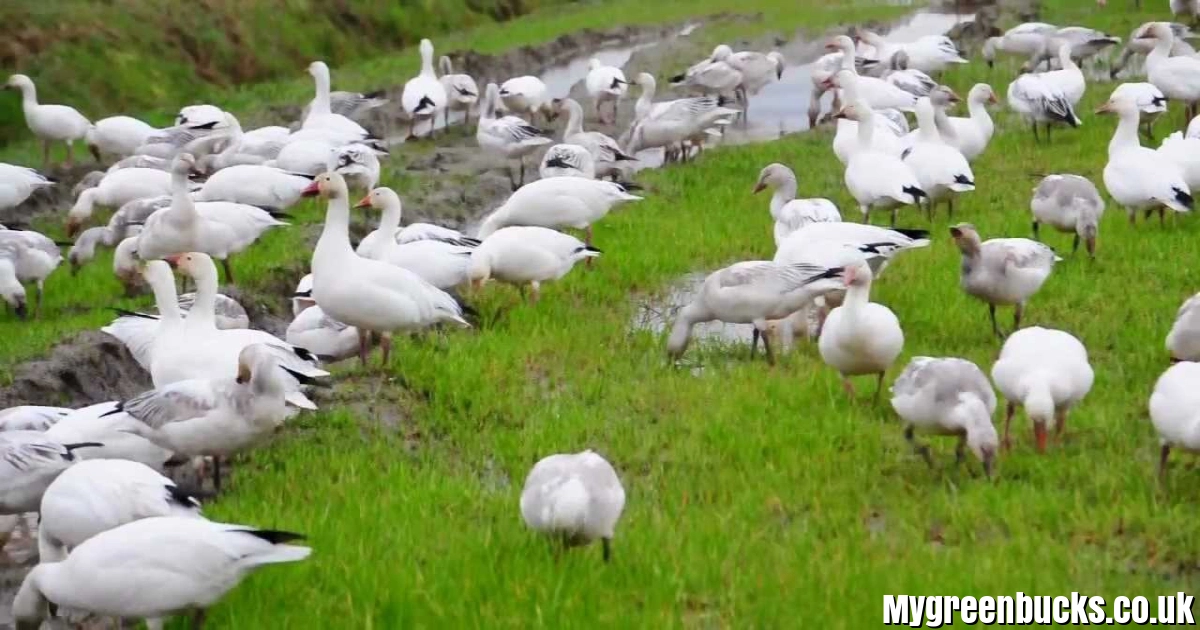
Snow Goose Chen Caerulescens: The Snow Goose (Anser caerulescens), previously classified as Chen caerulescens, is one of the most recognizable and abundant migratory birds in North America. Known for its bright white plumage, massive migrating flocks, and long-distance seasonal journeys, the Snow Goose plays an important role in wetland ecosystems and wildlife conservation.
Every year, millions of Snow Geese migrate between Arctic breeding grounds and winter habitats across the United States, creating spectacular natural events for birdwatchers and wildlife photographers. These migrations often involve thousands or even millions of birds flying in coordinated formations, producing loud honking sounds that can be heard miles away.
Although Snow Goose populations once declined due to habitat loss and hunting, their numbers rebounded dramatically in the late 20th century. Today, the species is considered one of the most abundant waterfowl in North America, with populations exceeding 15 million birds.
However, this success has created new ecological challenges, including overgrazing in fragile Arctic ecosystems. Wildlife agencies across the United States now manage Snow Goose populations through conservation programs and regulated hunting seasons.
This comprehensive guide explores the biology, behavior, migration patterns, and ecological importance of Snow Geese in the United States and beyond.
1. Overview of the Snow Goose Species
Snow Goose Chen Caerulescens: The Snow Goose belongs to the Anatidae family, which includes ducks, geese, and swans. It is a medium-to-large migratory waterfowl species native primarily to North America.
Scientific Classification and Taxonomy
The modern scientific classification of the Snow Goose is:
| Category | Classification |
|---|---|
| Kingdom | Animalia |
| Phylum | Chordata |
| Class | Aves |
| Order | Anseriformes |
| Family | Anatidae |
| Genus | Anser |
| Species | Anser caerulescens |
Previously, the species was classified under the genus Chen, which is why the name Chen caerulescens still appears in older scientific literature.
Importance of Snow Geese in North America
Snow Geese play a major role in:
-
wetland ecosystems
-
Arctic tundra environments
-
agricultural landscapes
Their feeding habits help disperse plant seeds and influence vegetation growth, making them an important ecological species.
Why the Species Is Famous in the United States
In the United States, Snow Geese are well known for:
-
massive migration flocks
-
popular waterfowl hunting seasons
-
birdwatching tourism
At certain wildlife refuges, over 100,000 geese can gather in a single area, creating a stunning wildlife spectacle.
2. Physical Characteristics and Identification
Snow Geese are easily recognizable due to their distinct plumage and bill shape.
Size, Wingspan, and Appearance
Adult Snow Geese typically measure:
-
Length: 25–31 inches (64–79 cm)
-
Wingspan: 53–65 inches (135–165 cm)
-
Weight: 4.5–7 pounds (2–3 kg)
They have:
-
a compact body
-
short neck
-
pinkish-orange bill
-
a unique black “grinning patch” along the bill.
Their black wing tips become visible when they are in flight, creating a dramatic contrast with their white feathers.
White Morph vs Blue Morph Snow Geese
One of the most interesting aspects of the species is the presence of two color morphs.
White Morph
-
mostly white feathers
-
black primary wing feathers
-
most common type across North America.
Blue Morph
-
dark gray or bluish body
-
white head and neck
-
more common in western populations.
Both morphs belong to the same species and often breed together.
Lifespan and Adaptations to Arctic Environments
Snow Geese are highly resilient birds capable of surviving extreme Arctic conditions.
Their typical lifespan includes:
-
15–20 years in the wild
-
up to 25 years in rare cases
Adaptations include:
-
thick insulating feathers
-
strong migratory endurance
-
efficient fat storage for long flights.
3. Habitat and Geographic Range
Snow Geese occupy a wide range of habitats depending on the season.
Arctic Breeding Grounds
During the summer breeding season, Snow Geese live in the high Arctic tundra, including:
-
northern Canada
-
Alaska
-
Greenland
-
Wrangel Island (Russia)
These regions provide open landscapes and abundant vegetation for nesting.
Wintering Habitats in the United States
In winter, large populations migrate to the United States.
Key habitats include:
-
coastal marshes
-
wetlands
-
agricultural fields
-
river deltas
Major wintering regions include:
-
Texas Gulf Coast
-
Louisiana wetlands
-
California Central Valley
-
Mississippi Alluvial Valley
Global Range and Population Distribution
Snow Goose populations are divided into three main groups:
-
Western Population – Pacific Flyway
-
Midcontinent Population – Central and Mississippi Flyways
-
Eastern Population – Atlantic Flyway
Although primarily North American, rare individuals occasionally appear in Europe or Asia.
4. Migration Patterns and Flyways
Snow Geese are among the most impressive migratory birds in the world.
Seasonal Migration Routes
Every year, Snow Geese travel up to 3,000 miles (4,800 km) between their breeding and wintering areas.
Migration occurs twice annually:
-
Fall migration: August–November
-
Spring migration: March–May
They fly in V-shaped formations, which improves aerodynamic efficiency.
Major Flyways in the United States
Snow Geese follow four primary migration corridors:
Pacific Flyway
-
Alaska and western Canada → California.
Central Flyway
-
Canadian prairies → Texas and New Mexico.
Mississippi Flyway
-
Midwest → Louisiana and Arkansas.
Atlantic Flyway
-
northeastern Canada → eastern US states.
Key Stopover Locations for Snow Geese
Important migration stopovers include:
-
Platte River (Nebraska)
-
Bosque del Apache National Wildlife Refuge (New Mexico)
-
Squaw Creek / Loess Bluffs NWR (Missouri)
-
Sacramento National Wildlife Refuge (California)
These locations attract thousands of birdwatchers each year.
5. Behavior, Diet, and Reproduction
Snow Geese display complex social and reproductive behaviors.
Social Behavior and Flock Dynamics
Snow Geese are highly social birds.
They often form:
-
large migratory flocks
-
colonial nesting groups
-
family units during migration
Parents and young goslings often stay together for up to a year.
Feeding Habits and Diet
Snow Geese are primarily herbivores.
Their diet includes:
-
grasses
-
roots and tubers
-
sedges
-
aquatic plants
-
agricultural grains
In farmland areas, they frequently feed on:
-
corn stubble
-
rice fields
-
wheat crops
This behavior sometimes causes agricultural conflicts.
Breeding Cycle and Family Structure
Snow Geese typically mate for life.
Breeding occurs during spring migration.
Key reproductive details include:
-
goslings fledge after 42–50 days
Young birds migrate south with their parents during their first autumn.
6. Conservation Status and Ecological Impact
Snow Geese present an unusual conservation story.
Population Growth and Overabundance Issues
Unlike many bird species, Snow Goose populations have grown dramatically.
Reasons include:
-
abundant agricultural food sources
-
reduced hunting pressure
-
improved wetland protection.
Today, their population exceeds 15 million birds.
Conservation Programs and Wildlife Management
Because of overpopulation, wildlife agencies manage Snow Goose numbers through:
-
extended hunting seasons
-
the Light Goose Conservation Order
-
habitat monitoring programs.
These strategies aim to prevent ecological damage to Arctic tundra habitats.
Importance of Snow Geese in US Ecosystems
Despite management challenges, Snow Geese remain an important species.
They contribute to:
-
seed dispersal
-
nutrient cycling
-
supporting wildlife tourism.
Millions of Americans participate in birdwatching and waterfowl hunting, making Snow Geese a key species in US wildlife culture.
Conclusion
The Snow Goose (Anser caerulescens) is one of North America’s most fascinating migratory birds. With spectacular seasonal migrations, striking plumage variations, and immense flock sizes, the species captures the attention of scientists, hunters, and birdwatchers alike.
While their growing population presents ecological challenges, Snow Geese remain a vital component of wetland ecosystems and wildlife conservation efforts in the United States.
As research and conservation programs continue, this iconic bird will remain an important part of North America’s natural heritage and migratory wildlife traditions.
FAQs
1. What is the scientific name of the Snow Goose?
The Snow Goose is scientifically known as Anser caerulescens, previously classified as Chen caerulescens.
2. Where do Snow Geese migrate in the United States?
They migrate through major flyways to regions such as Texas, Louisiana, California, and the Mississippi Valley.
3. Why are Snow Goose populations so large?
Population growth is linked to abundant agricultural food sources and improved conservation efforts.
4. What do Snow Geese eat?
Their diet consists mainly of grasses, roots, sedges, grains, and aquatic plants.
5. Are Snow Geese endangered?
No. The species is classified as Least Concern and is actually considered overabundant in some regions.