

Cornhole has become one of the most popular backyard games in the United States. From tailgates and family barbecues to professional tournaments broadcast on TV, the game has grown from a casual pastime into a recognized competitive sport. One of the most important aspects of playing correctly is understanding the official cornhole distance between boards.
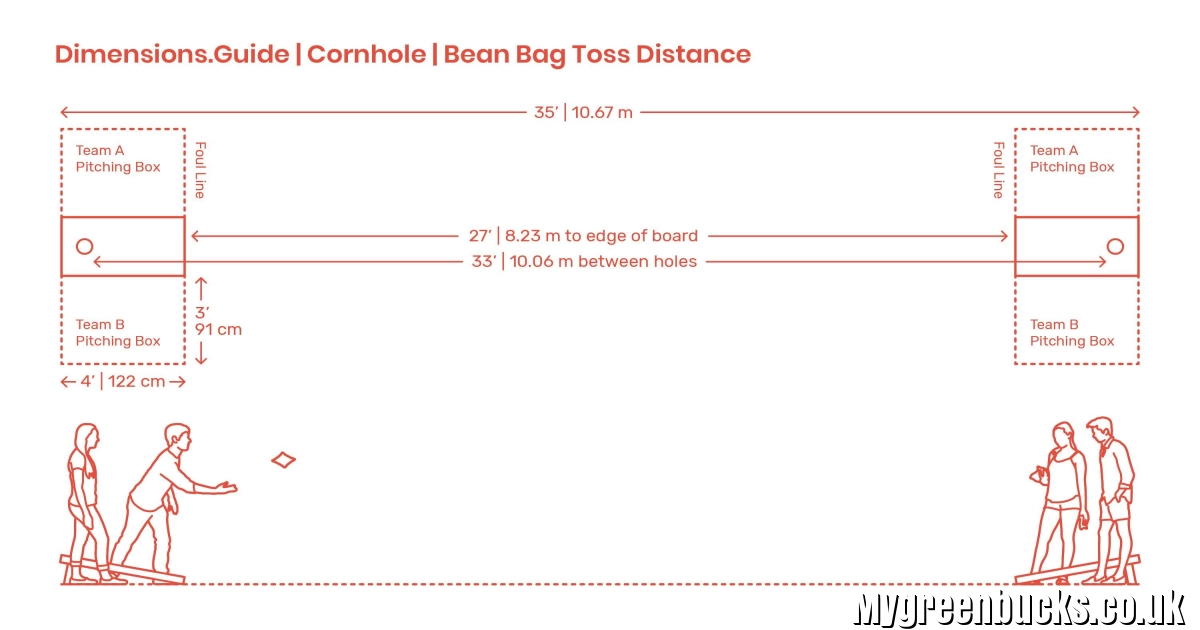
Cornhole Distance: According to the American Cornhole Association (ACA) and widely used in professional events like the American Cornhole League (ACL), the regulation cornhole distance is exactly 27 feet (8.23 meters). This measurement is taken from the front edge of one board to the front edge of the other board.
This guide explains everything you need to know about cornhole distance rules in the United States, including regulation spacing, youth variations, backyard setups, and tips for measuring your boards correctly in 2026.
Official Cornhole Distance According to ACA Rules
For professional or tournament play, the American Cornhole Association (ACA) sets strict regulations that ensure consistency across competitions.
Regulation Distance Between Boards
The official cornhole distance is:
-
27 feet (8.23 meters)
-
Measured front edge to front edge
This is the only measurement recognized in official gameplay. Many beginners mistakenly measure center-to-center or hole-to-hole, but those measurements are incorrect.
Why 27 Feet Is the Standard
The 27-foot spacing creates the ideal balance between accessibility and skill. At this distance:
-
Players must develop accurate throwing technique
-
Games remain competitive and strategic
-
Beginners can still improve with practice
Because of this balance, the 27-foot rule has remained the gold standard in the United States since the early 2000s.
Cornhole Board Dimensions and Setup Requirements
In addition to the distance between boards, the boards themselves must meet specific size standards for regulation play.
Official Board Size
According to ACA guidelines, each cornhole board must measure:
-
4 feet long
-
2 feet wide
These dimensions ensure a consistent playing experience across tournaments and casual games.
Hole Placement Rules
The hole in the board must follow these specifications:
-
6-inch diameter hole
-
Centered side-to-side
-
9 inches from the back edge
This placement ensures that bags landing near the top of the board still have a realistic chance of sliding into the hole.
Board Angle
The back edge of the board is raised to create a sloped surface. The standard height is:
-
12 inches off the ground at the back
This angle helps bags slide naturally toward the hole.
Pitcher’s Box and Player Positioning
Another important rule in official cornhole gameplay is the pitcher’s box, which defines where players must stand when throwing bags.
Pitcher’s Box Dimensions
Each board has two pitcher’s boxes, one on each side. The official size is:
-
3 feet wide
-
4 feet long
Players must remain within this area when throwing.
Foot Position Rules
To avoid fouls during a throw:
-
At least one foot must remain inside the pitcher’s box
-
Players cannot step over the front edge of the board
If a player steps past the front edge during a throw, it results in a foot foul, and the bag does not count.
Cornhole Distances for Kids and Beginners
While the 27-foot regulation distance is standard for adults, shorter distances are often recommended for younger players and beginners.
Recommended Distance for Children
The American Cornhole Association suggests that children ages 12 and under play at a shorter range:
-
12 to 15 feet
This allows kids to enjoy the game without needing excessive throwing strength.
Benefits of Shorter Distances
Shorter distances help:
-
Improve accuracy faster
-
Keep the game fun and competitive
-
Reduce strain on young players
Many schools and youth programs adopt these distances for family-friendly events and tournaments.
Casual Backyard Cornhole Distance
Not every game needs to follow professional tournament rules. In many casual settings, players adjust the board spacing based on available space.
Common Backyard Setup Distance
In smaller yards, tailgates, or patios, players often use:
-
20 to 21 feet between boards
This distance still feels competitive but is slightly easier than regulation play.
Why Casual Players Use Shorter Distances
Backyard players often shorten the distance because:
-
Space may be limited
-
New players can score more easily
-
Games move faster and feel more social
This flexible approach keeps cornhole accessible to everyone, regardless of skill level.
How to Measure Cornhole Distance Correctly
Setting up a proper cornhole court only takes a few minutes if you follow the correct steps.
Step-by-Step Setup Guide
-
Place the boards facing each other on a flat surface.
-
Use a tape measure or string to measure from the front edge of one board to the front edge of the other board.
-
Adjust the boards until the distance is exactly 27 feet for regulation play.
-
Mark the 3×4 foot pitcher’s boxes using chalk, cones, or tape.
Quick Equipment Tip
Serious players often keep a 27-foot tape measure in their cornhole equipment bag. This ensures quick and accurate setup for tournaments or competitive games.
Why the 27-Foot Distance Dominates U.S. Cornhole
The 27-foot regulation distance has remained the standard in the United States for decades because it strikes the perfect balance between challenge and playability.
Adopted by Major Cornhole Organizations
The distance is used by major governing bodies including:
-
American Cornhole Association (ACA)
-
American Cornhole League (ACL)
Professional tournaments across the country—from local leagues to major events in Las Vegas and other cities—follow this same measurement.
Perfect Balance of Skill and Fun
At 27 feet:
-
Casual players can still compete with practice
This balance has helped cornhole grow from a backyard game into a nationally recognized competitive sport.
Conclusion
Understanding the correct cornhole distance is essential for both casual games and professional competitions. The official regulation spacing of 27 feet between the front edges of the boards remains the standard across the United States, as defined by the American Cornhole Association.
While competitive play requires strict adherence to these rules, many players adjust the distance for children, beginners, or backyard games. Whether you’re playing at 12 feet for kids, 20 feet for casual fun, or the full 27 feet for tournament play, the key is setting up the boards correctly so everyone enjoys a fair and exciting match.
With the right measurements and a set of quality boards, you’re ready to enjoy one of America’s favorite outdoor games.
FAQs
1. What is the official cornhole distance in the United States?
The official regulation distance is 27 feet, measured from the front edge of one board to the front edge of the other.
2. What is the cornhole distance for kids?
Children ages 12 and under typically play at 12–15 feet to make the game easier and more enjoyable.
3. How far apart are cornhole boards in casual games?
Many backyard players use 20–21 feet when space is limited.
4. What size are regulation cornhole boards?
Official boards measure 4 feet long by 2 feet wide with a 6-inch hole centered 9 inches from the back edge.
5. Why is the distance 27 feet?
The 27-foot standard provides the ideal balance of skill, challenge, and accessibility, making it suitable for both amateur and professional play in the U.S.