

If you’ve ever landed your drone after what felt like five minutes and wondered where all your flight time went, you’re not alone. Battery life is the eternal struggle of every drone pilot, but here’s something most people don’t realize: your motors are probably the biggest culprit. Specifically, the way you’re using your brushless motor setup might be draining your battery two or three times faster than it should.
I learned this the hard way after burning through battery after battery on my racing quad, constantly charging and never understanding why my advertised 20-minute flight time turned into barely 8 minutes of actual flying. After diving deep into motor efficiency and talking with experienced pilots, I discovered three critical mistakes I was making. Fixing them literally doubled my flight time.
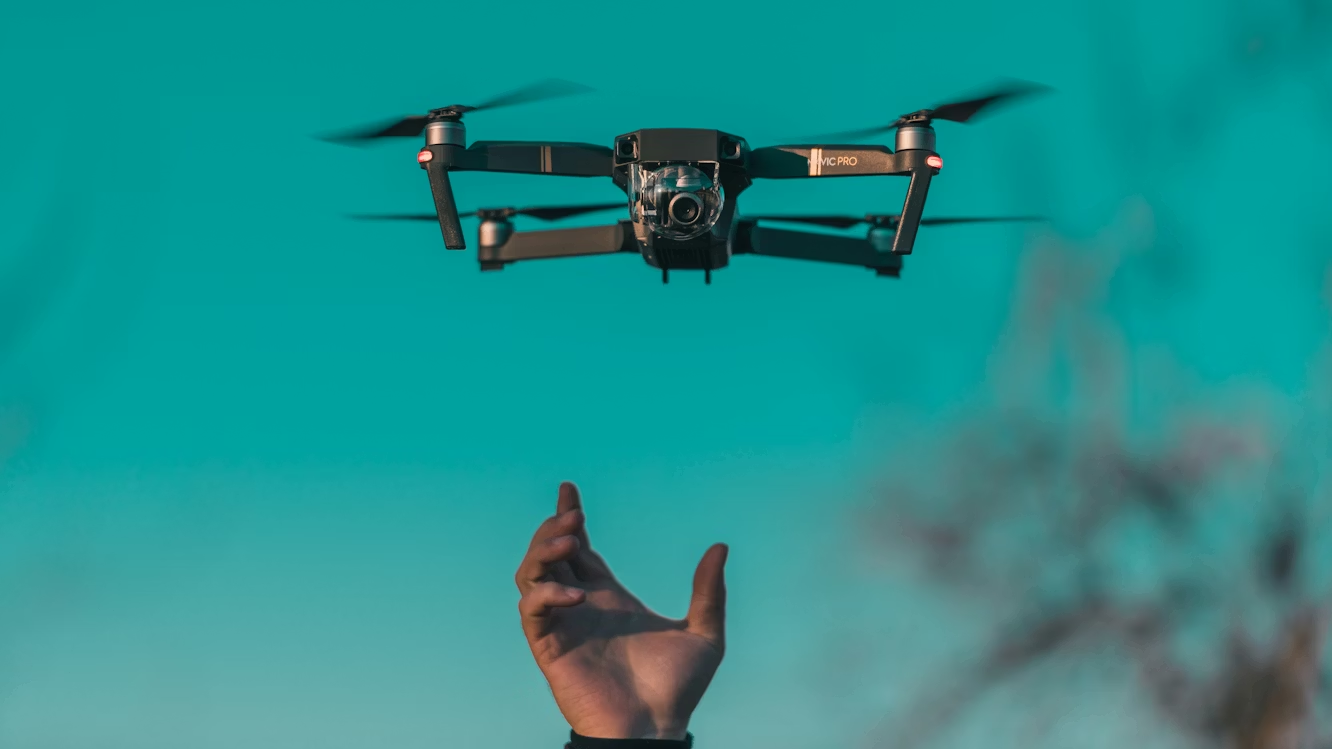
https://unsplash.com/photos/tilt-shift-lens-photo-of-mini-drone-3ciHxbx9H0U
Mistake #1: Running Motors Outside Their Efficiency Sweet Spot
Every motor has what engineers call an “efficiency curve” – basically a range where it converts electrical energy into mechanical power most effectively. Most pilots have no idea this exists, let alone where their motors operate best.
Here’s the problem: when you pair a high-KV motor (designed for speed and light props) with heavy propellers, you’re forcing that motor to work way outside its optimal range. It’s like asking a sports car engine to pull a trailer – sure, it’ll do it, but it’s going to guzzle fuel doing so.
The KV rating tells you how many RPMs per volt your motor will spin. A 2300KV motor on a 4S battery (16.8V fully charged) wants to spin around 38,000 RPM unloaded. If you throw massive propellers on there, the motor strains against that load, drawing excessive current and generating heat. That heat? That’s wasted energy that should be keeping you in the air.
I was running 2600KV motors with 6-inch props on my 5-inch racing frame because I wanted “more power.” What I actually got was motors that ran scorching hot and died within 6 minutes. When I switched to 2000KV motors better matched to my prop size, the difference was dramatic – cooler motors, smoother flight, and nearly 10 minutes of battery life.
The fix is simple but requires homework: check your motor manufacturer’s specifications for recommended prop sizes. If they suggest 5×4.3 props for your motor, don’t throw 6-inch tri-blades on there and expect good results. Match your motor KV to your propeller size and your typical flying style. Lower KV for bigger props and efficiency, higher KV for smaller props and speed.
Mistake #2: Ignoring Motor Timing and ESC Settings
This one’s more technical, but stay with me because it makes a huge difference. Your Electronic Speed Controller (ESC) sends electrical pulses to your motors, and the timing of these pulses drastically affects efficiency.
Most pilots use default ESC settings and never touch them. The problem is that default settings are often configured for maximum performance and responsiveness, not efficiency. It’s like driving your car in sport mode all the time – sure, it feels snappy, but you’re paying for it at the pump.
Motor timing specifically refers to when the ESC energizes the motor’s coils relative to the rotor position. Advanced timing gives you more punch and higher RPMs but draws more current and generates more heat. Conservative timing is smoother and more efficient but feels less responsive.
For freestyle and racing, aggressive timing makes sense. But if you’re doing aerial photography, surveying, or just cruising around, you’re throwing away battery life for responsiveness you don’t need. I was running 24-degree timing on my camera drone because I’d copied settings from a racing pilot’s YouTube video. Dropping it to 16 degrees gave me nearly 25% more flight time with zero noticeable difference in how the drone handled during smooth flying.
Most modern ESCs let you adjust timing through their configuration software. BLHeli_S and BLHeli_32 ESCs are particularly easy to configure. Don’t be intimidated by the technical interface – you’re mainly looking at one or two values. Start conservative and test. Your battery will thank you.
Mistake #3: Accepting Inefficient Motor-Prop Combinations
This is perhaps the most common mistake, and it’s happening right now on thousands of drones. Propeller selection isn’t just about whether a prop physically fits your motor shaft. The pitch, blade count, and material all create different loads on your motors, and the wrong combination murders your efficiency.
Propellers are basically spinning wings, and like wings, they can be designed for different purposes. A high-pitch, aggressive three-blade prop moves a lot of air and creates massive thrust, but it also creates massive resistance. Your motors have to work much harder to spin that prop, especially at higher speeds.
Here’s a real example: I switched from 5×4.3×3 props (5-inch diameter, 4.3-inch pitch, 3 blades) to 5x4x2 props (2 blades, slightly lower pitch) on the same drone. On paper, I lost some thrust. In reality, my flight time went from 9 minutes to 13 minutes, and the drone still had plenty of power for everything I needed to do. Those aggressive tri-blades were just converting battery power into heat and noise instead of efficient flight.
The material matters too. Carbon fiber props are stiffer and more efficient than plastic at high speeds, but they’re also heavier and create more inertial load during quick throttle changes. For efficiency flying, good-quality plastic props often win. They flex slightly, which actually reduces vibration and motor stress during sustained flight.
The tricky part is that you often need to buy a few different prop types to find what works best for your specific setup. When I was testing different combinations, I found it helpful to order variety packs rather than full sets of each type – it’s more economical when you’re experimenting. Places like r5d5.com often have sampler options where you can try different props without committing to 20 pairs of something that might not work for you.
The Bottom Line
Motor efficiency often gets overlooked. It doesn’t show up in YouTube videos or product marketing. But if you’re tired of constantly swapping batteries and cutting your flights short, these three areas are where you’ll find real improvements.
Start with matching your motor KV to your props and flying style. Then dive into your ESC settings and dial back unnecessary aggressiveness. Finally, experiment with different propellers – you might be shocked at how much flight time you’re leaving on the table.
The beautiful thing is that none of this requires spending money on new hardware. You’re probably sitting on 30-50% more flight time right now just by optimizing what you already have. And honestly, there’s something satisfying about staying in the air longer not because you bought a bigger battery, but because you actually understood how your drone works.
