

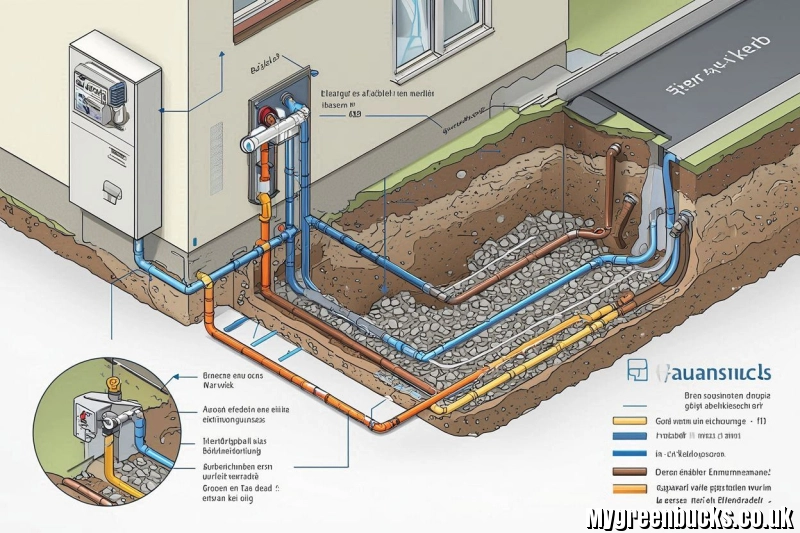
A Bauanschluss, also known as a Hausanschluss or Grundstücksanschluss, is a critical concept in construction and utility engineering across Germany, Austria, and Switzerland. It refers to the process of connecting a building or property to essential public utility networks. These connections ensure that a home or commercial building becomes fully functional and livable.
The Bauanschluss typically includes connections for electricity, drinking water, sewage systems, gas supply, and telecommunications such as broadband or fiber internet. In some cases, it may also involve district heating or rainwater drainage systems. Without these connections, even a fully built house cannot operate efficiently.
In 2026, the importance of proper planning for a Bauanschluss has increased due to rising material costs and stricter building regulations. Many homeowners underestimate this stage, but it plays a decisive role in both the timeline and budget of a construction project.
Types of Bauanschlüsse Explained
Understanding the different types of connections helps you estimate costs and plan better. A standard Bauanschluss includes several utility links, each serving a specific purpose.
Electricity (Stromanschluss)
The electricity connection is essential for powering appliances, lighting, and heating systems. Providers such as E.ON or Westnetz handle installation, and costs typically range between €1,500 and €3,500 depending on distance and complexity.
Water and Sewage Connections
The drinking water connection ensures access to clean water, while the sewage system (Kanalanschluss) manages wastewater disposal. These are often the most expensive parts, especially sewage, which can cost up to €6,000.
Gas and Internet Connections
Gas connections are optional and depend on network availability. Meanwhile, fiber-optic internet is becoming standard in 2026, with some regions offering free installation during expansion phases, while retrofitting can exceed €5,000.
Who Is Responsible for the Bauanschluss?
The responsibility for a Bauanschluss is shared between multiple parties, but the financial burden usually falls on the property owner or builder (Bauherr).
Utility providers such as local municipal utilities (Stadtwerke), water authorities, or network operators are responsible for connecting the property to the main supply lines. However, the construction work within the property boundaries, such as trenching or laying pipes, is often handled by the owner or a hired civil engineering contractor (Tiefbauer).
This division of responsibility means coordination is crucial. Delays often occur when one party completes their work but must wait for another to proceed. In 2026, many providers offer digital application systems, but the process can still take several weeks or months.
Typical Bauanschluss Costs in Germany (2025–2026)
The total cost of a Bauanschluss depends heavily on location, distance from the main road, and soil conditions. However, average figures provide a useful guideline.
| Connection Type | Typical Cost (2026) | Notes |
|---|---|---|
| Electricity | €1,500 – €3,500 | Often flat-rate pricing |
| Drinking Water | €2,000 – €5,000 | Includes pipe installation |
| Sewage | €3,000 – €6,000 | Most expensive component |
| Gas | €1,000 – €3,000 | Only if network exists |
| Internet/Fiber | €0 – €5,000 | Free in some areas |
| Total | €8,000 – €15,000 | Can exceed €20,000 in complex cases |
Due to inflation and increased labor costs, prices in 2026 have slightly risen, but not drastically. Rural properties often face higher costs because of longer connection distances.
Step-by-Step Bauanschluss Process in Germany
The Bauanschluss process follows a structured path that aligns with the construction timeline.
1. Property Purchase and Planning
Before construction begins, check whether development costs (Erschließungskosten) are already included in the purchase price. This can significantly reduce your expenses.
2. Application and Approval
Submit applications to each utility provider early. Delays at this stage can slow down the entire project.
3. Offers and Contracts
Each provider will send a cost estimate, either as a flat rate or based on distance. Contracts must usually be signed before work begins.
4. Installation and Final Setup
Connections are typically installed before or during the early construction phase. After completion, meters are installed, and services become active.
Bauanschluss vs. Utility Connections in Pakistan (2026 Perspective)
In countries like Pakistan, the term “Bauanschluss” is not commonly used, but the concept exists in a different form.
For example, in Faisalabad, electricity connections are handled by FESCO, while water and sewage fall under WASA. Gas connections, managed by SNGPL, are limited in availability.
The costs are significantly lower compared to Europe, often ranging between 10,000 and 50,000 PKR, but the process can involve long waiting times and bureaucratic challenges. In some cases, unofficial payments—often referred to as “speed money”—may influence the timeline.
While Germany emphasizes structured processes and transparency, developing regions may face challenges in efficiency and infrastructure reliability. This makes planning and local knowledge essential when building internationally.