

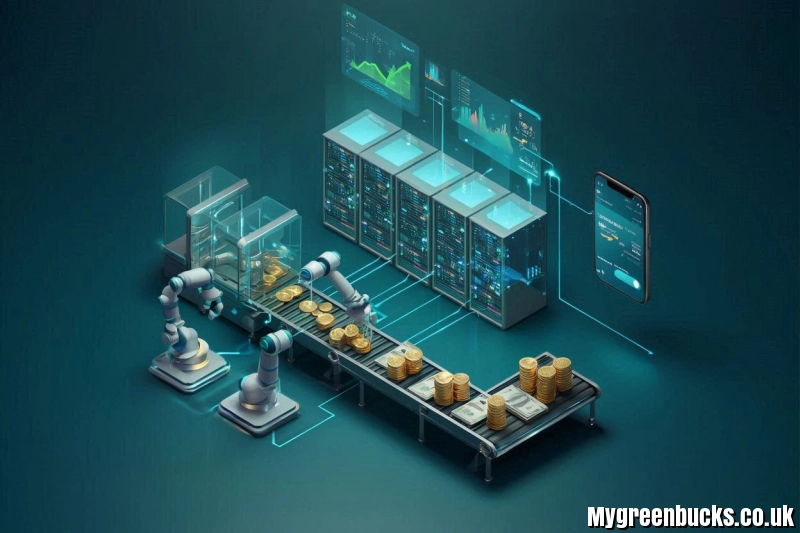
Money automation is the process of setting up a system where your financial tasks, such as saving, bill payments, and investing, happen automatically without your manual intervention. Managing your finances often feels like a second full-time job. Between tracking every cup of coffee, remembering when the electric bill is due, and trying to tuck away a few dollars for a rainy day, it is easy to feel overwhelmed. Most people start the month with great intentions, but end it wondering where their paycheck disappeared to.
This constant mental load creates friction. When you have to make a conscious decision to save money every time you get paid, you are fighting against your own willpower. Eventually, willpower loses. You might skip a month of savings to buy a new pair of shoes or forget a credit card payment date, resulting in unnecessary late fees and a hit to your credit score.
The good news is that you do not need a degree in finance to fix this. By implementing a money automation system, you can eliminate human error in your banking. You can transition from a stressed manual manager to a confident system architect. Using tools like WunderTrading or simple banking apps allows you to focus on leading your life while your bank account handles the chores.
Stop managing your money and start leading your lifestyle by putting your finances on autopilot.
What is money automation?
At its simplest level, money automation is about creating a “set it and forget it” environment for your cash flow. Instead of logging into your bank portal five times a week to move money around, you create instructions that tell your bank exactly what to do the moment your income arrives.
The core philosophy behind this is the “rules → actions” framework. Think of it like a digital assistant that follows your specific commands.
The Automation Logic: Rules → Actions
- The Rule (The Trigger): The specific condition you set.
- Example: “When my salary is deposited…” or “On the 5th of every month…”
- The Action (The Execution): This is the task the bank or app performs automatically.
- Example: “…transfer $200 to my savings” or “…pay the internet bill.”
By embracing personal finance automation, you ensure that your future self is taken care of before your present self has a chance to spend the money on something impulsive.
Why Money Automation Matters in 2026
In 2026, the speed of the digital economy has made manual money management nearly obsolete. With the rise of subscription-based services and instant digital payments, it is easier than ever to lose track of small expenses that bleed your account dry.
Real-life relevance comes down to mental bandwidth. We are bombarded with information daily, and decision fatigue affects our ability to make smart financial choices after a long workday. Automation solves this by making the right choice the default choice. Furthermore, modern budgeting automation tools now offer sophisticated triggers that ensure your financial plan stays resilient even when you are too busy to check your balance.
Core Components of Money Automation
To build a robust system, you need to address four specific pillars of your financial life. Each of these components works together to create a seamless flow of capital from your paycheck to your goals.
Autopay Systems
The foundation of any plan is the autopay system. This involves linking your recurring bills, rent, utilities, insurance, and subscriptions directly to your checking account or a dedicated credit card. By automating these payments, you eliminate late fees and ensure your essential services are never interrupted.
Automated Savings System
An automated savings system is the most effective way to build an emergency fund. Instead of saving what is left over at the end of the month, you pay yourself first. You can set up your payroll provider to split your direct deposit into two different accounts. This way, the money you intended to save never even hits your checking account.
Budgeting Automation Tools
Gone are the days of manual spreadsheets. Modern budgeting automation tools sync directly with your bank accounts to categorize your spending in real-time. These tools provide the data you need to adjust your rules without requiring you to type in every single receipt, making passive money management a reality.
Passive Money Management
Passive money management involves setting up high-level strategies that grow your wealth in the background. This includes features like “sweep accounts” that move excess cash into high-yield interest accounts automatically. It is about making sure that every dollar you own is working for you.
Manual vs Automated Money Management
| Feature | Manual Management | Automated Management |
| Effort Required | High (Weekly/Daily) | Low (Initial Setup Only) |
| Risk of Late Fees | High (Human Error) | Extremely Low |
| Savings Consistency | Low (Depends on Willpower) | High (Guaranteed) |
| Stress Levels | High (Constant Monitoring) | Low (Peace of Mind) |
| Mental Bandwidth | High (Decision Fatigue) | Minimal |
How to Set Up Your Money Automation System
Setting up your system does not have to happen all at once. Build it in stages to ensure you feel comfortable with the flow of money:
- Map Your Cash Flow: List your monthly income and every recurring expense. Know exactly when your money comes in and when it needs to go out.
- Establish a “Buffer”: Keep a small amount of extra cash in your checking account to act as a safety net for any unexpected timing overlaps in your payments.
- Set Up Direct Deposit Splits: Use your payroll provider to send a fixed percentage to a separate savings account. This is the ultimate automated savings system.
- Connect Your Bills: Log into your utility and credit card portals and select “Autopay.” Choose the “Statement Balance” option to avoid interest charges.
- Audit Monthly: Spend 15 minutes once a month reviewing your transactions. Automation is not “set and forget forever”; it is “set and supervise.”
How Automation Extends to Investing and Trading
Once you have mastered your daily personal finance automation, you can apply the same logic to building long-term wealth. Investing should not be an emotional rollercoaster. By using an automated savings system for your brokerage account, you can practice dollar-cost averaging, which means buying assets at regular intervals regardless of the price.
This “rules → actions” logic is also found in more advanced areas like trading. For example, a trader might use a signal bot to execute a trade based on specific market conditions. If the price of an asset hits a certain level (the rule), the bot performs the buy or sell (the action). Keeping your investing simple and educational is key to staying consistent over decades.
Realistic Expectations and Common Mistakes
While money automation is a powerful tool, it is not a magic wand. To keep your system healthy, avoid these common mistakes:
- Neglecting the Monthly Audit: The biggest mistake is setting a system and never checking it again. If you continue to automate a subscription you no longer use, you are essentially automating waste.
- Having a “Zero” Buffer: Leaving your checking account balance at zero is risky. If a bill processes just before your paycheck arrives, you could be hit with unnecessary overdraft fees.
- Over-Automating Too Quickly: Do not try to automate everything on day one. Start with essential bills, then gradually move on to your automated savings system and investments once you are comfortable.
- Ignoring Card Expirations: When your debit or credit card expires, your autopayments will fail. Always remember to update your card details in your payment portals immediately upon receiving a new card.
- Setting Unrealistic Savings Rules: Do not set a savings rule that is so aggressive that it leaves you unable to cover your basic living expenses. You will end up breaking your own system by having to move money back out.
FAQs
Is money automation safe?
Yes, as long as you use reputable banking institutions and secure budgeting automation tools with multi-factor authentication.
Do I need a lot of money to start?
Not at all. You can start by automating $5 a week into a savings account. The goal is to build the habit and the system, regardless of the amount.
What happens if I lose my job?
This is why an audit is important. If your income changes, you simply log in and pause your automated transfers until your situation stabilizes.
How does money automation help with debt?
By setting up autopay for more than the minimum payment, you ensure that you are consistently chipping away at your principal balance without having to think about it.
Is it difficult to set up a new automated savings system?
It is quite simple; most modern banking apps allow you to create recurring transfers in just a few clicks, making personal finance automation accessible to everyone.
Conclusion
Transitioning to a system of money automation is one of the most impactful steps you can take for your financial health in 2026. By removing the need for constant decision-making, you reduce stress and increase the likelihood of reaching your long-term goals.
Whether you are using simple bank transfers or exploring how a signal bot can assist in your investment strategy, the goal remains the same: clarity and consistency. Start small by automating one bill today, then gradually build your automated savings system until your entire financial life runs like a well-oiled machine. Be realistic, stay observant, and let technology handle the heavy lifting while you focus on what truly matters to you.