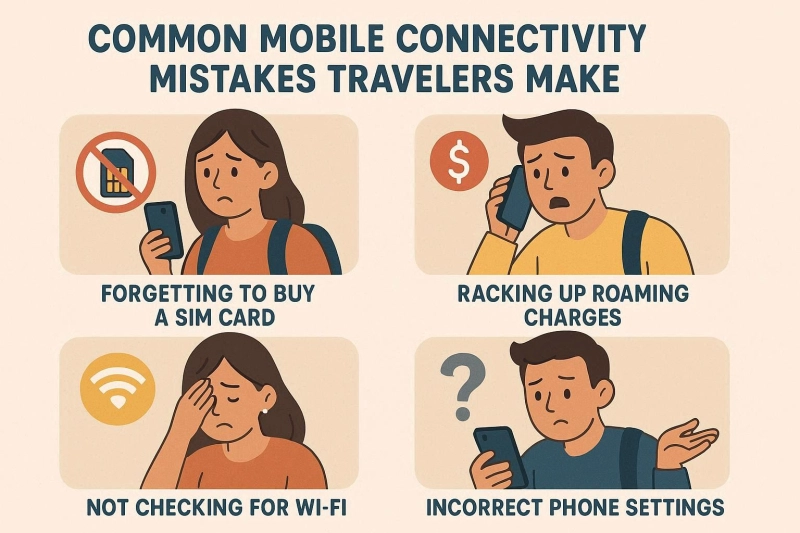
A traveler lands in a new country, turns on mobile data, and nothing works. No maps, no ride apps, and no way to check hotel directions. Many travelers assume mobile connectivity will work automatically, but small planning mistakes before the trip often cause big problems later. These mistakes usually involve choosing the wrong data plan, ignoring coverage details, or relying too much on public WiFi.
Understanding these common mistakes helps travelers make better decisions before departure. Many travelers now use a travel eSIM because it helps them choose suitable data plans, manage coverage across countries, and avoid common connectivity problems that interrupt travel plans and daily activities.
Wrong Data Plan Selection
One of the most common mistakes travelers make is choosing the wrong type of data plan. Some travelers buy very small data plans for long trips, while others buy very large plans for short trips and end up wasting money. Travelers should match data plans with travel duration and daily usage.
Short stay plans work well for weekend trips, while extended stay plans work better for long trips. Regional data bundles and global data passes are useful for travelers visiting multiple countries during the same trip. Choosing the right plan helps travelers avoid frequent recharges and service interruptions.
No Coverage Check Before Travel
Many travelers assume their data plan will work in every location, but coverage varies by country and network provider. Poor coverage can cause slow speeds or no connection in certain areas, especially outside major cities. Before selecting data plans, travelers should check supported countries and network partners. This helps ensure the connection works in airports, hotels, and travel routes.
Many travel digital SIM plans connect to local partner networks, which helps maintain a reliable connection across different destinations. Coverage checks also help travelers avoid buying plans that do not support their destination.
Plan Validity Date Mistakes
Another common mistake is ignoring plan validity dates. Some travelers purchase a 7-day plan for a 10-day trip, which causes the plan to expire before the trip ends. This leads to unexpected data loss and the need to buy another plan. Travelers should always match plan validity with travel dates. Short stay plans, multi-week plans, and monthly plans are commonly available, and choosing the correct validity period helps maintain a continuous connection throughout the trip. Correct validity planning also helps travelers control their overall data expenses.
Too Much Dependence On Public WiFi
Public WiFi is useful in airports and hotels, but it should not be the main source of internet during travel. Public networks may be slow, unreliable, or insecure. Travelers who rely only on WiFi may face problems when maps or booking apps are needed outside hotels.
Mobile data plans provide more consistent access to internet services during travel. Many travelers use mobile data for navigation, bookings, and communication, and use WiFi only when available for general browsing.
Not Estimating Daily Data Usage
Many travelers do not estimate how much data they use each day. Navigation, messaging, ride apps, and social media all consume data regularly. Without estimating usage, travelers may run out of data in the middle of the trip.
Travelers should check their phone’s data usage history before travel. Light usage plans work for maps and messaging, standard plans work for daily browsing and bookings, and high data plans work for video calls and remote work during travel.
Buying Local SIM Cards In Every Country
Buying local SIM cards in every country can take time and require registration and identification in some locations. Travelers may also lose time searching for SIM stores after arrival.
Many travelers now choose regional plans, global data passes, or multi-country bundles that work across several countries. A travel eSIM helps travelers switch between data plans digitally, which reduces the need to buy physical SIM cards in every destination.
Not Understanding Plan Activation Rules
Some data plans activate immediately after purchase, while others activate when the device connects to a network in the destination country. Travelers who do not understand activation rules may lose plan validity before the trip begins.
Travelers should read activation details before purchasing data plans. Understanding activation timing helps travelers use the full validity period and avoid losing service days before the trip even starts.
Travel connectivity problems usually happen because of small planning mistakes before departure. Choosing the right data plans, checking coverage, matching validity with travel duration, and understanding activation rules can help travelers avoid most connectivity problems. Many travelers now use a travel digital SIM because it helps them manage mobile data plans more easily and avoid common connectivity mistakes during international travel.