

Quick Answer
Crypto cards let users spend cryptocurrency through a Visa or Mastercard network while the issuer converts supported digital assets into fiat at checkout. The best crypto cards in 2026 balance verified cashback rates, transparent fees, APR opportunities, regional availability, and practical spending limits—not simply the highest advertised rewards.
Key Takeaways
- Diverse Reward Frameworks: Crypto cards differ significantly in cashback conditions, fees, supported countries, and reward structures.
- Immediate vs. Tiered Access: Up to 10% cashback is available, but eligibility often depends on complex loyalty tiers or promotional conditions.
- Passive Yield Integration: Select cards offer passive yield on idle balances, such as up to 7% APR on eligible USDT products.
- Reward Stability: Stablecoin cashback provides more predictable, non-volatile value than exchange-token rewards.
- Geographic Constraints: Availability remains a primary deciding factor due to regional regulatory restrictions.
The digital asset landscape has shifted crypto cards from a tech novelty to an indispensable daily financial tool. Millions of users now seek seamless ways to clear real-world transactions using blockchain portfolios without enduring the friction of manual exchange transfers or multi-step banking conversions.
However, evaluating cards solely on headline metrics like “up to 10% cashback” can lead to unexpected out-of-pocket expenses. Hidden conversion spreads, foreign transaction fees, and native-token staking requirements can easily erode rewards. This streamlined review analyzes verified fees, achievable cashback, passive yield, and regional availability to isolate the best choices for your wallet in 2026.
What Is a Crypto Card and How Does It Work?
A crypto card is a payment card linked to a cryptocurrency account that automatically converts supported crypto into fiat currency when purchases are made through the Visa or Mastercard network. They eliminate the manual step of selling digital currencies prior to making a payment.
When a cardholder presents a card at a terminal, the transaction completes in seconds:
- Wallet Funding: The user deposits digital assets into their designated card wallet or exchange account.
- Card Authorization: The merchant processes the card via standard Visa or Mastercard networks.
- Crypto-to-Fiat Conversion: The issuer instantly calculates and liquidates the exact cryptocurrency amount required to match the fiat purchase price.
- Merchant Settlement: The network transfers the fiat currency to the merchant’s bank account.
Most exchange options function as crypto debit cards or prepaid cards, requiring users to fund balances before spending to minimize credit risk. True crypto credit cards extend a fiat credit line paid off with crypto, but are rare due to global payment regulations and the efficiency of instant point-of-sale liquidations.
How We Evaluated the Best Crypto Cards in 2026
The best crypto card is determined by total value rather than a single feature. This comparison prioritizes verified fees, achievable rewards, regional availability, and long-term usability.
Our evaluation measures programs against ten vital metrics:
- Verified cashback rates and tier accessibility.
- Annual, issuance, and replacement fees.
- FX, crypto conversion spreads, and ATM withdrawal costs.
- APR or passive savings opportunities.
- Reward currency stability (stablecoins vs. volatile exchange tokens).
- Spending limits, supported assets, geographic availability, and ecosystem app usability.
Best Crypto Cards in 2026 Compared
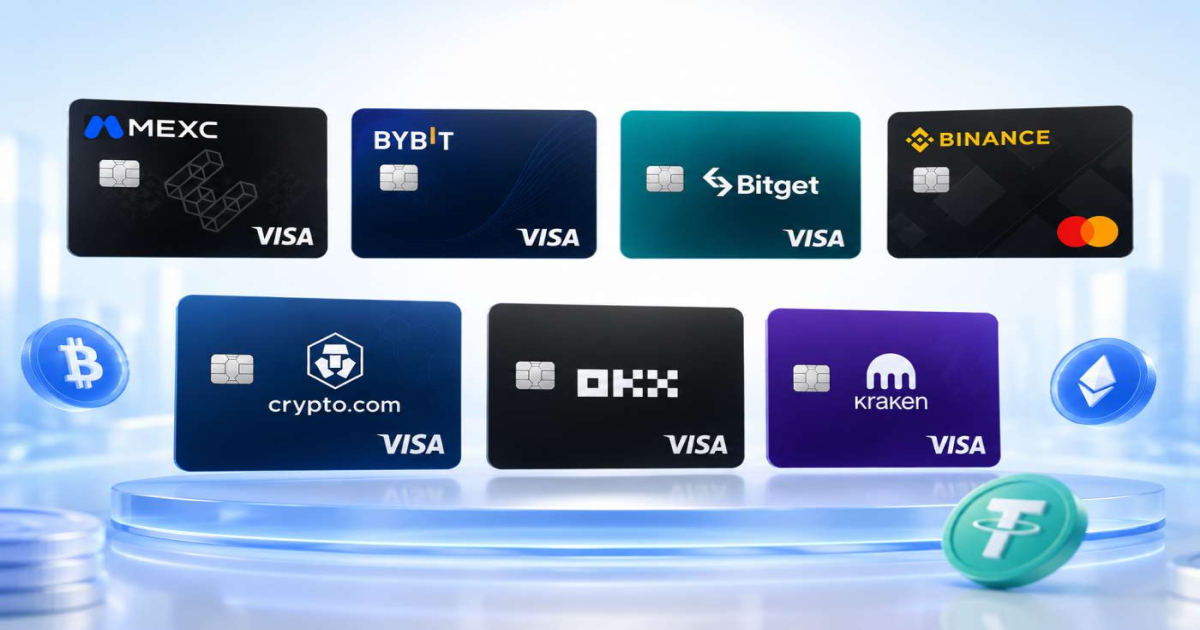
Each leading crypto card excels in different areas. Some maximize cashback, others minimize international fees or offer passive yield.
| Card | Cashback | APR | Reward Currency | Annual Fee | Foreign Exchange Fee | Availability | Best For |
| MEXC Card | Up to 10% | Up to 7% on eligible USDT savings | USDT | None | 1% conversion fee | Selected regions | Cashback + passive yield |
| Bybit Card | Up to 10% (tiered) | Varies | Crypto | None | Regional rules | EEA & supported markets | Everyday spending |
| Bitget Card | Tiered rewards | No major program | Crypto | None | Varies | Limited regions | Exchange users |
| Binance Card | Tiered rewards | Flexible Earn separate | BNB | None | Low | Supported countries | Binance ecosystem |
| Crypto.com Visa | Up to 8% | Earn available | CRO | None | Low | Broadly regulated | Premium perks |
| OKX Card | Limited cashback | Separate yield products | Crypto | None | 0% FX (+ spread) | Supported regions | International travel |
| Kraken Card | Limited cashback | Separate yield products | Crypto | None | 0% FX (+ spread) | Selected countries | Low-cost spending |
Detailed Reviews of the Best Crypto Cards
MEXC Card
The MEXC Card targets users seeking a combination of high cashback and passive stablecoin income without requiring native-token staking. It operates as an industry-leading utility card designed to deliver immediate financial benefits back to the user. Before applying, users should review the MEXC Card supported countries to confirm regional availability and KYC eligibility.
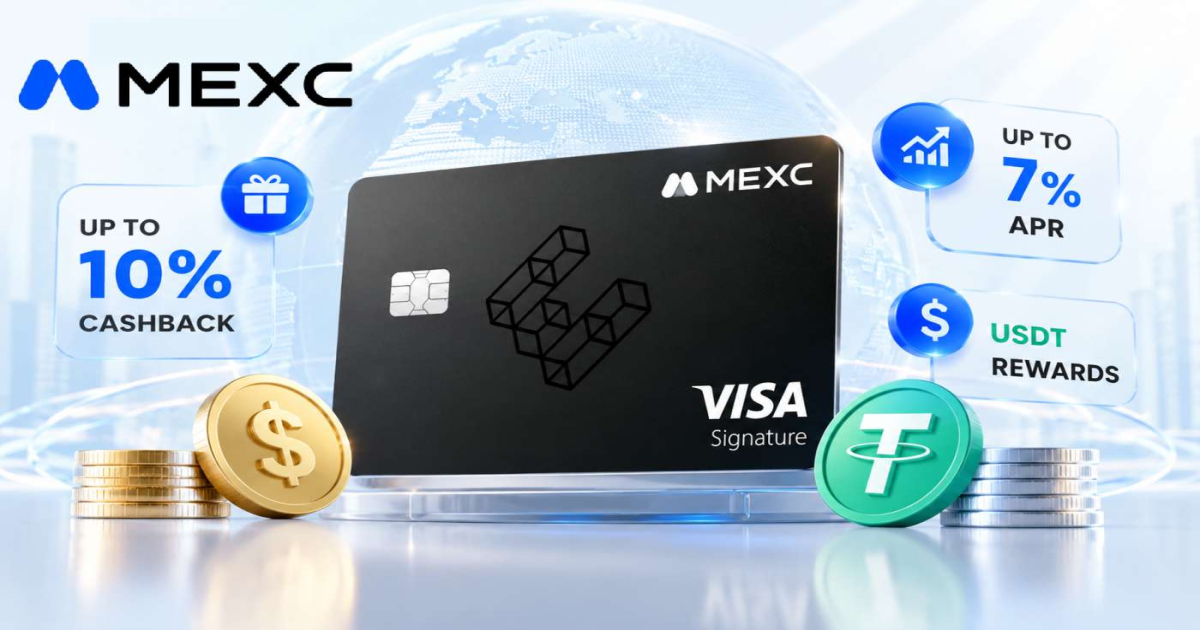
The card structure uses an automated, multi-tiered reward ecosystem determined by user engagement and account status. This setup features three distinct tiers:
- Standard: Provides 4% cashback, capped at 100 USDT per month.
- Premier: Provides 6% cashback, capped at 300 USDT per month.
- Elite: Provides 10% cashback, capped at 800 USDT per month.
A standout advantage is its reward framework: the card dispenses cashback directly in USDT, eliminating the volatility risks of platform-native tokens. Furthermore, the card hooks into an exclusive, secondary savings product, allowing cardholders to earn up to 7% APR on eligible USDT savings pools. This setup requires a minimum balance of 100 USDT, accrues interest up to a maximum cap of 100,000 USDT, and calculates yield hourly with payouts arriving the next day.
Daily capacities are scaled for high-volume spenders, permitting up to 100,000 USDT per single transaction, 1,000,000 USDT daily, and 5,000,000 USDT monthly. In terms of cost transparency, MEXC charges a 1% exchange spread on USD purchases, while non-USD transactions include an additional 1% cross-border fee. There are no annual maintenance fees, though a physical card issuance fee of $25 applies, alongside a $2 monthly inactivity fee if the account sees no transactions for 3 consecutive months.
Bybit Card
The Bybit Card focuses on crypto-native spending with competitive promotional rewards and integration into the broader Bybit ecosystem. It features a zero-annual-fee setup and supports multiple popular layer-1 assets alongside stablecoins. Notably, the card page advertises up to 8% APR on eligible asset savings, though total lifetime cashback earnings remain bounded by specific regional tiers.
Binance Card
The Binance Card is designed for users already active within the Binance ecosystem, with rewards tied to BNB holdings. It allows users to leverage spot balances across global Mastercard terminals, but maximizing its potential requires holding heavy positions in the native utility asset.
Crypto.com Visa Card
Crypto.com offers one of the broadest card ecosystems, though premium rewards generally require CRO staking. Lower tiers offer basic utilities, while high-end metal tiers introduce luxury perks like airport lounge access and subscription rebates for lifestyle users.
OKX Card
The OKX Card prioritizes efficient international spending with competitive foreign exchange pricing rather than headline cashback. By utilizing direct network market spreads, it removes excessive conversion layers for global travelers crossing borders.
Kraken Card
The Kraken card emphasizes transparent spending costs and integration with the exchange instead of aggressive reward programs. It gives regular account holders a secure, practical mechanism to exit positions instantly at competitive conversion spreads.
Bitget Card
The Bitget Card provides a straightforward spending solution for existing Bitget users with moderate reward opportunities. It simplifies direct checkout routing and skips steep annual maintenance rates, making it a reliable payment instrument for retail traders.
Verified Fees That Matter More Than Cashback
Hidden costs often reduce the real value of crypto card rewards, making fee transparency more important than headline cashback percentages. A card advertising massive rewards can become a net-negative asset if fee structures chip away at your base principal during every swipe.
Monitor these primary fee channels to protect your returns:
- Foreign exchange fees: Charged when spending outside your base currency (often 1% to 3%).
- Crypto conversion spreads: The premium added to the asset price when converting crypto to fiat at checkout.
- ATM, Annual, and Issuance fees: Out-of-pocket costs for cash access, account upkeep, or physical card delivery.
- Inactivity charges & Daily limits: Penalties for non-use and caps on transaction sizes.
Cashback vs APR: Which Creates More Long-Term Value?
Cashback rewards active spending, while APR benefits users who maintain larger crypto balances. The better option depends on individual spending habits and portfolio size.
Active consumers get superior, immediate feedback from premium cashback programs. Conversely, long-term investors holding large digital asset capital without frequent liquidations find higher multi-year compounding returns through APR accounts. Blended ecosystems, like MEXC, eliminate this choice by pairing immediate stablecoin cashback with high-yield 7% APR instruments on underlying USDT balances.
Which Crypto Card Is Best for Different Types of Users?
No single crypto card is best for everyone. The right choice depends on how you spend, travel, invest, and manage your crypto assets.
- Best for highest cashback: Programs delivering raw, unencumbered double-digit cashback directly in stable assets.
- Best for earning passive income: Platforms providing high APR interest points straight to underlying stablecoin holdings.
- Best for international travel: Low FX cross-border alternatives designed to smooth out multi-currency transitions.
- Best for beginners: Straightforward, non-staking debit cards featuring a clean interface and simple funding access.
- Best for active traders: Cards tied directly to high-liquidity global spot and derivatives trading books.
- Best for stablecoin holders: Cards that reward users directly in stable coins like USDT, avoiding volatile market drops.
How to Choose the Right Crypto Card in 2026
Before applying for a crypto card, verify both the published rewards and the eligibility requirements that determine whether you can actually access those benefits. Use this systematic checklist before registering:
- Verify supported countries: Confirm active physical or virtual card shipping to your region.
- Review KYC requirements: Prepare required identification and proof of address for security clearance.
- Compare reward currencies: Differentiate between stable USDT payouts and volatile native tokens.
- Calculate net cashback: Deduct conversion spreads from advertised rates to find the true yield.
- Understand spending caps & APR eligibility: Audit transaction limits and required lock-up terms.
- Compare total fees: Review processing, ATM withdrawal, and account maintenance costs.
Conclusion
Selecting the ideal crypto card in 2026 involves navigating trade-offs between eye-catching cashback percentages, hidden conversion fees, regional availability, and passive yield incentives. Chasing the highest unverified advertising headline can lead to value loss if complex staking requirements or heavy foreign transaction spreads are hidden in the fine print.
True utility lies in balance. By looking closely at verified fee schedules and matching them against your daily spending footprint, you can select an optimized crypto card that protects your base principal, rewards your daily transactions, and steadily compounds your capital over time
Frequently Asked Questions
Which crypto card offers the highest cashback in 2026?
The MEXC Card sits at the peak of the market, serving up to 10% cashback directly to eligible spenders natively in stable USDT rather than volatile exchange assets.
Are crypto cards debit cards or credit cards?
The vast majority are structured as prepaid debit cards. Users fund their internal exchange balances before spending, allowing the platform to settle transactions instantly at checkout.
Which crypto card has the lowest foreign transaction fees?
Travel-focused options like OKX and Kraken feature low fees by leaning on tight underlying network spreads, while utility choices like MEXC maintain a clear, flat 1% conversion structure.
Can I earn interest while using a crypto card?
Yes. Top-tier providers offer integrated savings accounts alongside card functionality. For instance, you can secure up to 7% APR on underlying eligible USDT positions while maintaining your card account.
Is stablecoin cashback better than native-token rewards?
Stablecoin cashback offers predictable value. Earning rewards in USDT preserves exact purchasing power, sheltering your accumulated cashback from sudden crypto market drops.